Author Archives: Murderati Members


WRITER-ON-WRITER CRIME

by Gar Anthony Haywood

Few things in life fascinate me more than plagiarism.  Or, as I like to call it, “writer-on-writer crime.”  The idea of one author consciously stealing material from another — sometimes in massive chunks — in the belief he’ll get away with it, even in this age of instant, multi-platform communication, just blows my mind.  Talk about sociopathic behavior!

Last month at the spectacular Murder and Mayhem festival in Muskegee, Wisconsin, Duane Swierczynski hipped me to the strange and fantastic case of first-time novelist Quentin Rowan, aka Q.R. Markham, who’d just recently been exposed as maybe the most prolific and self-destructive plagiarist of all time.  I won’t go into all the details here of the mess Rowan created — such details are all over the internet in places like this and this, if you’re interested — but in a nutshell, the would-be literary superstar humiliated his publisher, Mulholland Books, and the host of authors who enthusiastically blurbed him (including Duane), by selling them all an espionage novel — ASSASSIN OF SECRETS — that turned out to be little more than a mashup of the works of at least five other authors.   Detailed analysis of the manuscript has revealed, in fact, that lines, let alone paragraphs, of Rowan’s own invention are few and far between.

Yet nobody recognized Rowan’s book as a hodge-podge of disparate material stolen from multiple sources — not his editor, not reviewers (both Kirkus and Publisher’s Weekly gave ASSASSIN OF SECRETS a starred review), not the authors who blurbed him — until users of a James Bond message board began to comment on the similarities they were finding between Rowan’s work and that of Ian Fleming and several other name spy novelists.

At first, I found this last amazing.  How could no one have noticed earlier?  But then I read whole passages of Rowan’s “novel” and understood that serial plagiarism of this kind, when done well (if not brilliantly), may not be as easy to spot as one would think.  God bless Quentin Rowan’s black little heart, but hell if he didn’t stitch all that unrelated prose together in a way that actually made for a compelling and, more importantly, seamless read.

Which brings me to this, my first contribution to the fun and games of Wildcard Tuesdays here at Murderati.  Just for kicks, I thought I’d try my hand at playing Q.R. Markham for a day.  The following is a mashup of my own writing and that of five of my Murderati brethren.  Can you tell which is which?

I’ll give away a copy of my new thriller, ASSUME NOTHING, to whoever does the best job of separating plagiarism from original writing.  I’ve numbered every line, so all you have to do is tell me which ones are my work and which ones are not.  There’s no need to specify who I’ve borrowed from in each case.  I’ll give you that info at the end of the day.

Obviously, I’m counting on all of you to play fair — no Googling, Amazon surfing, or skimming through the pages of BOULEVARD, KISS OF DEATH, or FOURTH DAY allowed.

Good luck!

1.  Farrell never knew his mother or father.  2.  He’d grown up alone in the world, fending for himself as best he could against all the hardship life could throw at him.

3.  Which, as it turned out, was plenty. 4.  Monsters on the street saw a kid on his own, no adult around to watch his back, they were swimming in circles around him before he could blink.

5.  Still, Farrell sometimes wondered if being parentless wasn’t a blessing in disguise.  6.  It gave him a kind of freedom from the usual attachments that seemed to hold others back.

7.  Life would be more fluid for him because love and desire and ambition would be a question of choice, not obligation

8.  At least, he liked to think choice was how he ended up this way, teetering on the brink of thirty with his heart firmly tethered to a wife and two teenage daughters.  9.  This wasn’t just something that had happened to him, it was the product of design.

10.  “That’s your study partner?  You’re getting in a car with him?

11.  “Yes, Daddy.  His name is Steven.”  Cassie snatched her keys off the hallway table on her way out.  “Bye, gotta go.”

12.  Farrell took another look out the front window, not caring if “Steven” saw him or not.  13.  What he saw made him blanch.  14.  The young man was big and pink, with firm layers of fat billowing out from under a bright red polo shirt.  15.  He was shaped like one of those hard rubber Kongs, the type Doberman pinschers used to sharpen their teeth.

16.  And most terrifying of all, his car was a Volvo, bolted to steel wheels better suited to a trailer park Oldsmobile.

17.  “I don’t like it,” Farrell said.

18.  Cassie grinned and flipped a hand, dismissing the warning. 19.   Then she yanked open the screen door, breaking into a run as soon as she hit the porch.

20.  Such was his daily existence now, going from one blown-off note of worry to another.  21.  His wife Natalee didn’t need his protection but Cassie and May, Cassie’s younger sister, both courted death like a rich suitor.  22.  They took chances that would give a circus daredevil pause, leaving Farrell nothing to do but fear for their lives every waking moment.  23.  He could see their end in every accident or natural disaster.

24.  A fire, for instance.  25.  Standing on his bedroom balcony just after lunch, he smelled the smoke first, then sighted it spiraling upward, over the dingy rooftops to the east.  26.  Soon there were fire trucks in the distance, their Doppler-effect wails punctuated with staccato chatter-and-yelp as they barreled through each intersection.

27.  May, he thought irrationally.  May’s caught in the fire.

28.  He dialed her cell phone before common sense could get the better of him and she picked up on only the fourth ring.  29.  He was offering her one of his standard apologies when the line went suddenly silent, as if the phone had been abruptly snatched from the girl’s hand.  30.  Then there was just noise, the ragged sounds of what a paranoid fool like Farrell could only assume was a struggle:

31.  Deep, fight-for-air panting.  32.  Heavy thuds of elbows or boots against a car’s solid metal door.  33.  A long exhaled breath.  34.  Then more silence, before a kicked pebble ricocheted off a beer can as someone moved away.

35.  Farrell couldn’t remember the last time he’d felt the need to scream.  36.  Maybe eight years ago, when Natalee had punctuated one of their more violent arguments by closing a taxi door on his left hand?  37.  But he needed to scream now.

No Questions for the Class today, but I would love to hear any great stories of plagiarism you might have to tell.  I just can’t get enough of ’em.
The Simple Act of Showing Up

by Pari

It started as a blog about assumptions. About Christmas and how the dominant culture in our country assumes that everyone is celebrating the same holiday. As I typed, the piece turned into a ponderous post with an overinflated professorial voice.  And who’d want that the week before holiday fever overtakes us all?

Because of the season, the blog then moved to latkes and Hanukkah. I even found this really fun video.

But I’ve written about latkes before (sorry the pix don’t seem to be uploading).

Then it moved to
conversations with adolescents
my old haunts in Ann Arbor
Googling old friends
the joy of looking at Christmas lights . . .

And that, in a nutshell, is the the wasteful, but interesting, side-effect of being a true pantser.  I write to find story — or topic — rather than outlining and finding flaws before making a creative commitment. That means that pages of prose will have traveled from my fingertips onto the computer before I know if an idea that seems good really has legs.

Often, as evidenced by the journey of writing this particular blog, the projects fizzle out quickly. This may have less to do with craft than the fact that when I delve into the meat of the subject, it turns out to be too boring, depressing or weak for more exploration. Sometimes, in the writing, I discover that a thought deserves attention and that I’m not quite in the place to make it come alive yet. I usually put those pieces of stories (or blogs) in a folder for later consideration.

I used to think that writing was almost spiritual in nature. The mental image I carried was of a woman in a 1920s garret in Paris, her hands gloved in scratchy gray wool, an espresso near her fingertips, the heavy smoke of a home-rolled cigarette coloring the darkened room’s air a bluish gray. So rapt in creativity would she be that nothing could distract her from her task. (And, of course, she’d never outline!)

Alas, in the decades I’ve been writing, I’ve never lived up to anything resembling that woman. In childhood and adolescence, perhaps, the act of penning a short story or poem carried a certain romantic aura. In adulthood, however, my creative life has been about simply showing up.

Today, as I went through the 10-15 ideas for this blog, I realized that while showing up may be more oatmeal than éclair, it works for me. It has forced me to produce and produce some more; it has nourished the commitment necessary to keep going even if inspiration falls flat.

And because I show up daily, I always — eventually — stumble upon something truly worth the effort.

Year-end wrap-up

by Alexandra Sokoloff

Somehow it has gotten to be December (how the hell?)  and one of my editors and I have been commiserating about how really freaking glad we both are that this year is drawing to a close. Even if the world does end (or start over) in 2012, it’s just got to be better than this year.  Doesn’t it?

Those of you who read this blog regularly know that I’m not one for the in-depth online personal disclosures.  Authors live a little in the spotlight, if just a minor one, and that’s fine, it’s not that I’m shy– but let’s face it, there are some strange people out there and you never know who’s reading.

So without getting too detailed about it, on the personal level this has been an enormously hard year for me. A lot of loss, as in death. Within six months: my father, a beloved aunt, and my cat of 19 years. My father from Alzheimer’s, and all I can say about that is – Don’t get it.  And I hope to God someone figures out prevention and cure to end that scourge.

All of this was coming down while I was not long out of and certainly not recovered from a devastating and permanent split from my significant other.

While here in New Agey California people are liable to say cheery and optimistic things like “What doesn’t kill you makes you stronger” and “God (the Goddess, the Universe) never gives us more than we can handle,” I’m not so sure about that. I think lots of people get more than they can handle.  Just take a look at all the crime and illness and tragedy in the world. People snap all the time. Does that mean they could have handled it and they just didn’t?  Well, yeah, sometimes, but some, I think, really do get more than anyone could handle.

Anyway, I’m handling it, I guess, but I’m also very aware that I’ve been pretty effectively shut down for most of the year, enough so that sometimes I’ve wondered if I’d ever really be coming back from it. Surviving is not the same as thriving.

On the other hand, I’d have to be the biggest narcissist on the planet not to know that I have it a lot better than a lot of people, especially in this economic climate.  I’m making a comfortable living at the thing I most love to do (although I admit, sometimes that love looks a lot like—something not so loving.).  E books are a godsend, and I have a lineup of book contracts that sometimes gives me panic attacks, but after a really rough patch there after Dad died, I have been managing my deadlines and doing a book on the side,  too, as well as getting some of my backlist formatted for e-release.  In fact it’s kind of amazing how much I got out there this year:

– I e-published a second Screenwriting Tricks for Authors workbook:  Writing Love, and my first YA thriller: The Space Between.

– I finished the first book in a paranormal trilogy for Harlequin: Twist of Fate. 

– I finished a draft of and am now rewriting a new crime thriller than I’m writing on spec (about which I will say very little because I’m superstitious that way).

– The Unseen came out in the UK.

– I wrote a short story, In Atlantis, for Thriller 3, Stories to Keep You Up at Night, coming out in June 2012.

– I am about 100 pages into Night Shift, my second book in the continuing paranormal series The Keepers, that I’m writing with two of my best friends and favorite authors, Heather Graham and Harley Jane Kozak.

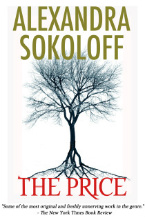
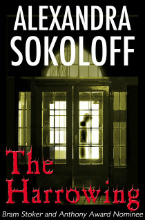
– And this month, I am releasing e versions of The Harrowing, The Price, and Book of Shadows in various countries.

It’s absolutely amazing, really, for me to look at that list, which doesn’t even include the workshops I taught this year, when I feel like all I did sleep and once in a while shuffle around the house running into furniture like some kind of undead thing. And I wanted to put it all on paper (or whatever this is) to prove to myself that I’m haven’t checked out of life completely, no matter how I feel sometimes.

In fact I am actually starting to love writing Night Shift, which is not something I say very often about my writing; finishing is so infinitely superior to the actual process.

And it’s great to be full time in the Hotel California again, except for time on the road, of course…  Both of the books I’m working on now, and my last, The Space Between, are set in California and it’s taken me a while to come around to it, but there aren’t many people more qualified than I am to write about this state. (I know it’s a terrible thing to say but I LOVED those violent winds last week; that was the most fun I’ve had in a long time.) I’m finally far enough out of the Hollywood trauma to write about that, too, and I am truly loving using the movie business as a backdrop to this paranormal thriller.  It’s so easy, in a way; I don’t have to think, I can just have fun.  I can set a scene on Catalina if I want and I don’t have to research it, I don’t have to take a field trip (although I could).

Maybe writing could be this way all the time.

And I may not know where I’m going to live next in any permanent way, but I am starting to have at least the beginning of faith that I will find a direction. Eventually.

Maybe I’ll find the rest of it, too. Eventually.

So, everyone – how was YOUR year?

Alex

 ————————————————————————————————

!!REVIEW COPIES!!

I am giving away 100 review copies of Book of Shadows, The Harrowing and The Price for potential review on Amazon, Goodreads and LibraryThing.

Book of Shadows for UK readers and anyone in France, Germany, Italy or Spain who might want to review it on Amazon.fr, Amazon.de, Amazon.it, or Amazon.es.


The Harrowing and The Price: for US readers and anyone in France, Germany, Italy or Spain who might want to review either or both on Amazon.fr, Amazon.de, Amazon.it, or Amazon.es.


If you’re interested, please e mail me at alex AT AlexandraSokoloff DOT com and I’ll get you a copy of your choice.

Thanks, everyone!!

The allure of the short story

Today I’d like to welcome Aussie author Angela Savage to Murderati. This is my second instalment, following on from my interview with Katherine Howell, to introduce some Aussie authors here at Murderati. 

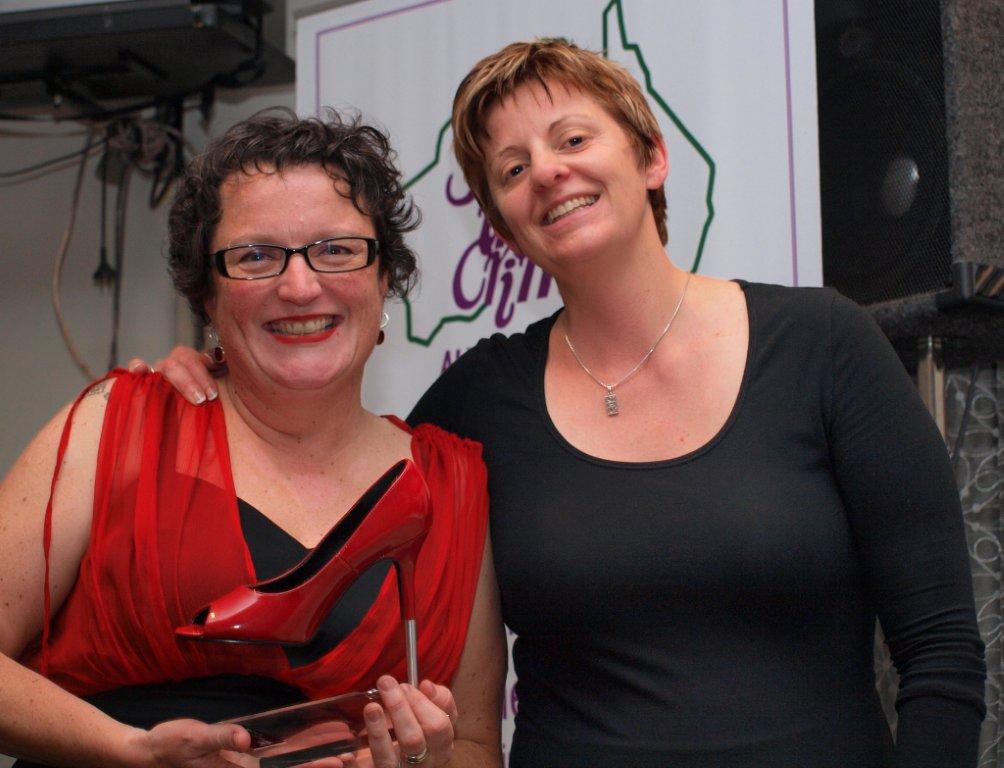
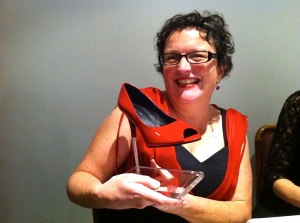
I’ve met Angela a couple of times on the mystery ‘scene’ and ran into her again at Sisters in Crime Australia’s Scarlet Stiletto Awards – Angela won the top honour of the night and I was there as the official presenter. You may also recognise Angela from my ‘photoshoot to kill for’ blog.

Given Angela’s first novel was written after an award-winning short story introducing her main protagonist, and that she’s written extremely successfully in both the short and long form, I asked Angela to blog about the short story and the novel. What attracts her to both forms? Does she approach them with a similar mind-set?

I’ve entered the Sisters in Crime Australia Scarlet Stiletto Awards short story competition twice, once in 1998 and again in 2011.

The first time I was an unpublished writer with an abandoned manuscript burning a hole in my filing cabinet. Short story competitions provided me with focus, opportunities to practice my craft and try something new. The Scarlet Stilettos held the particular appeal of being exclusively for women writers, with stories required to have an active woman protagonist.

In what was my first foray into crime fiction, I submitted a story called ‘The Mole on the Temple’ about an Australian expatriate detective called Jayne who exposes a card scam in Bangkok.

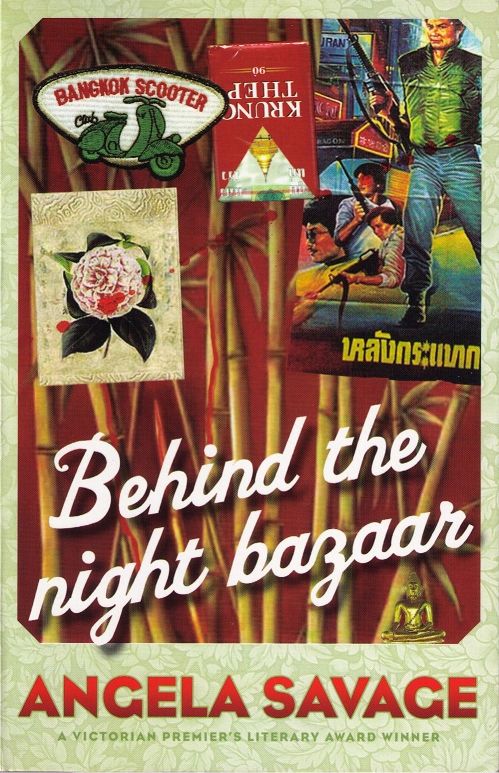
My story won third prize. More valuable than the prize money was the confidence this gave me to persevere with both the crime genre and the main character. Jayne went on to acquire the surname Keeney and became the hero of my first novel Behind the Night Bazaar published in 2006. The second book in the Jayne Keeney PI series The Half-Child followed in 2010 and I’m currently working on the third, working title The Dying Beach.

Funnily enough, Behind the Night Bazaar started life as a short story that just kept growing. I’ve since ‘cannibalised’—to use Raymond Chandler’s word—several of my early short stories for scenes or subplots in my novels.

I’m not the only author to have kick-started my writing career with a prize at the Scarlet Stilettos. So far 15 women, including category winners like me, have gone on to publish novels. But I’m the first established novelist in the 18-year history of the Scarlet Stiletto Awards to return to the scene and take home the coveted Scarlet Stiletto trophy.

So what made me decide to enter the competition again after a 13-year break?

Part of the motivation stems from a crisis I had earlier this year about whether I could call myself an ‘Australian writer’, when everything I’d written was set in Thailand in the 1990s, albeit featuring Australian characters. I challenged myself to set a story closer to home and the result was my winning entry for the 2011 Scarlet Stilettos, ‘The Teardrop Tattoos’ set in contemporary Melbourne. The plot, involving a restricted breed dog, became inadvertently topical when a four-year-old-girl was tragically killed in an attack by a pit bull terrier only weeks after I submitted the story to the competition.

As in 1998, the short story form gave me an opportunity to try something new. But this time around I have no desire to develop the characters or plots into a full-length novel.

Pound for pound, I find short stories harder and more time consuming to write than novels. Short stories and novels have different centres of gravity. Both need to hook readers in at the start, but the narratives have different arcs. Short stories are less forgiving. There’s no room for superfluous adjectives or adverbs.

With novels you can loiter a little, while the nuances of the story and characters play out. Short stories have to maintain the pace or they’re dead in the water.

Secretly, like an actor who longs to direct, I’d really like to write songs—to tell a whole story in three or four verses and a haunting refrain.

I’ll just have to keep practising.


Angela’s first book, Behind the Night Bazaar, won the Victorian Premier’s Literary Award as an unpublished manuscript in 2004 and was shortlisted for the Ned Kelly Award for Best First Book in 2007. Her second novel, The Half-Child was shortlisted for the Ned Kelly in 2011 for Best Fiction. The Half-Child is available in Kindle version on Amazon or in hard copy through Text Publishing.

We’re interested in hearing your thoughts about short stories and novels. Do you read both? Write both?

Angela will be around to answer questions too!

LETTERS FROM THE EDITOR

by Gar Anthony Haywood

A little over a month ago, I finished a book I’d been working on for almost a year.  It’s my first crack at a chapter book for young readers, in this case middle-schoolers grade 6 through 8.  I don’t want to say too much about it here because the manuscript’s still out making the rounds and I don’t want to jinx anything.  But for the purposes of this discussion, what you need to know is that it was inspired by the wonderful, zany, hilarious (IMO) work of Daniel Pinkwater, a prolific giant in the kid-lit universe, and as such, it’s not going to be for everybody.  Off-center comedy never is.

As you might expect, my wife Tessa and our two children, Maya and Jackson, were my first-readers, and the three of them loved the book.  LOVED it.  Which was one hell of a relief, let me tell you, because they’d been bugging me to try a children’s book, and finish this one, for ages, and if I’d rewarded all their patience with a dud, well…  Let’s just say I might at this very moment be taking that plunge off the Bedford Falls bridge Jimmy Stewart only contemplates taking around this time every year.

Still, what an author’s first-readers — spouses, children, aunts and uncles, etc. — think about a book doesn’t always foreshadow how agents and editors will react to it.  Quite often, in fact, the two schools of thought are diametrically opposed.  So while I found great encouragement in my family’s rave review, I didn’t put too much stock in it.  The professionals had yet to speak, and they’re the ones, after all, who write the checks.

My agent greatly enjoyed the book and promptly sent it out.  Two rejections are already in, and here’s what the first one sounded like:

“I realize this is a farce but I don’t find it very funny and I think it is problematic that this manuscript doesn’t use real responses to censorship as a springboard to the action, but instead creates a fake situation just for the sake of the story. Good luck finding the right editor for this.”

My First Reaction: Fear.  Uh-oh.  This does not bode well.

My Second Reaction: Indignation.  Wait, this humorless putz edits children’s books?  And he/she wants to complain about a lack of “real responses” in my novel after conceding that it’s a farce?  What’s wrong with this picture?

My Final Reaction: Fear again.  Uh-oh.  What if the putz is right?

Because sometimes the putz is right, and in fact is not even a putz at all, and you and all your first-readers are wrong.  Your book is either dead on arrival or seriously flawed, and the sooner you face up to the fact and get down to the business of fixing it (or trashing it), the sooner you’re likely to make your next sale.  Denial just costs you time you can’t afford to waste.

On the other hand, giving up on a viable manuscript just because an editor or two (or three) doesn’t care for it can be just as unproductive, if not more so.  Editors have agendas, and biases, and bad days just like all the rest of us, so their judgment can’t always be trusted as certifiable.  And the scope of what they can buy these days — non-potential blockbusters need not apply — severely dampens their enthusiasm for books that don’t fit the bill.

I’ve never done an exact count, but I would estimate that my agent and I received over thirty rejections over a period of 18 months for my last novel CEMETERY ROAD.  Some were incredibly kind, others blunt to the point of cruelty, but all, in the end, were expressions of indifference to a novel I firmly believed was the best I’d ever written.  After all those rejections, had I put the book down (to use an equestrian term), who could have blamed me?

And yet. . .

When the book was eventually published by Severn House, it earned me some of the best reviews of my career.  Positive fan mail continues to flow in, like this email I received just this week:

“Just a quick note to say how much I enjoyed CEMETERY ROAD.   A friend loaned me her copy.  I liked it so much that when I went to Amazon to send it as a gift to my elderly Aunt Connie (who will love it), I passed up the used copies so you’d get your pittance in the royalties.

“You really did a terrific job weaving plausible, interesting characters engaged in a complicated, suspenseful, believable plot.  Keep up the good work.  I’m looking forward to reading the books you have already written and reading the ones you will write in the years to come.”

Do letters and reviews like this invalidate all the rejections the book received earlier?  Emotionally, yes.  But not every rejection CEMETERY ROAD received from editors to whom it was submitted, regardless of how well appreciated the book has been since its publication, was misguided, or the work of a clueless dunderhead.  Many were honest and heartfelt and exactly the right call for the editor’s house at that moment in time.

Which brings me to the conundrum I face yet again today, as I wait for more editorial responses to my Daniel Pinkwater homage for young readers to dribble in:

How to know when to take a rejection letter to heart and when to line your birdcage with it?

Questions for the Class: When do you take rejection seriously enough to rethink a manuscript’s viability?  Are editors the best judges of a great read, or do readers tend to do a better job of recognizing greatness?

The importance of cake

Sorry we’re a little late to the party today for our Wildcard Tuesday offering. I’m stepping in late-notice with a little Wild Card fun…a princess birthday cake!

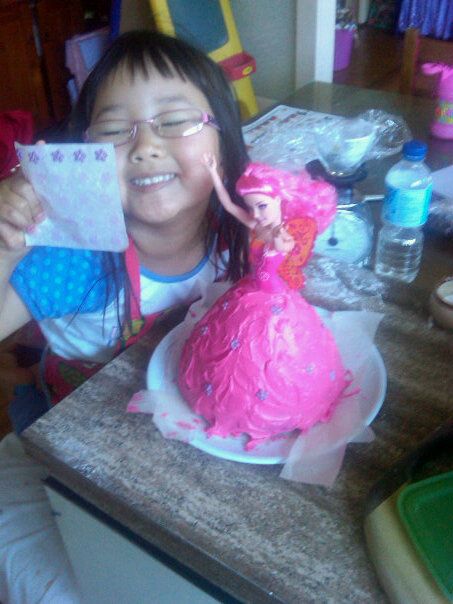
Yesterday was my daugther’s 5th birthday. We have a tradition in our family of celebrating birthdays for many days…and her 5th is no exception. So we started off on Sunday with my family coming over to celebrate. Then on the actual day (yesterday) she had ‘Cake in the Park’ with her pre-school friends. And on Sunday (11 December) she’s having a fairy birthday party. Anyway, I decided to use yesterday as the practice run for my Fairy Princess Cake. I spent quite a bit of time researching this – recipes, cake tins (Dolly Varten) and decorating options. 

I will post the recipe below, but first I wanted to show you the many stages of the cake decorating that went on early yesterday morning!

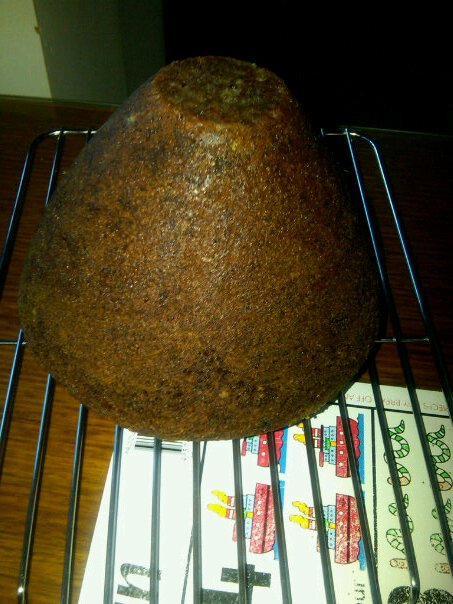
Stage 1: Banana cake baked and cooled (night before)

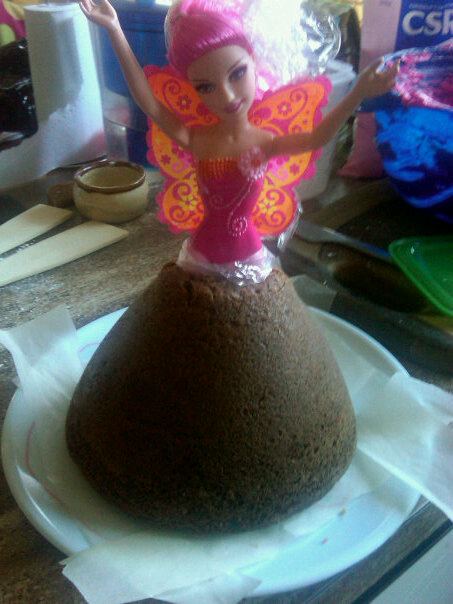
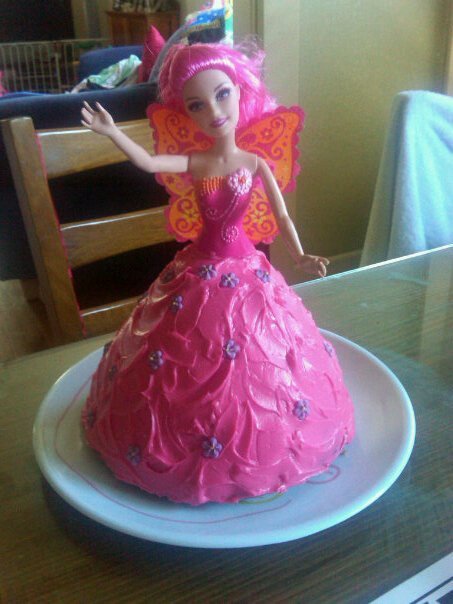
Stage 2: Stick fairy Barbie into the cake (and also line the plate). Note: I’m afraid some of Barbie’s legs had to go. I know…cruelty to dolls is NOT a good sign! But it was off at the knees for this Fairy Barbie.

Stage 3: Pink cream cheese icing/frosting made.

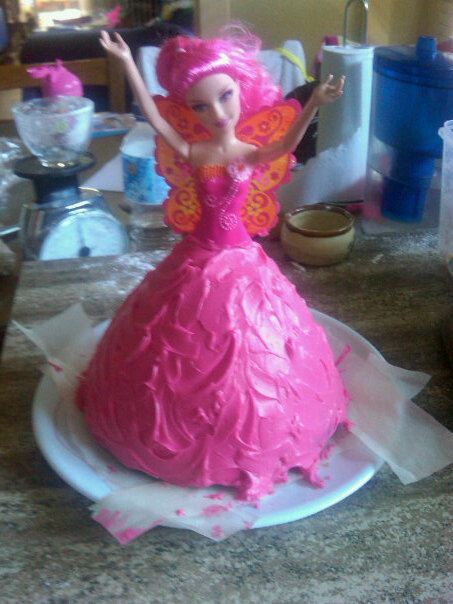
Stage 4: Fairy Barbie’s dress is iced!

Stage 5: Decorating the dress – with my little helper (still in her pyjamas)

Stage 6: Take a step back and bask in the glory. Especially when your husband laughed – loudly – when you first told him of the task at hand and showed him photos you were aiming to replicate!

Both Grace and I were very happy and her pre-school friends devoured the cake in minutes. I got a taste too and it was yummy! 


So, the recipe:
4 oz butter
1 cup sugar  
1 egg 
1 tsp baking soda
3 tbsp milk  
2 mashed bananas
1 ½ cups flour          
1 ½ tsp baking powder

Cream the butter and sugar.  Add egg and beat well.  Dissolve soda in warm milk and mix in. Add mashed bananas.  Lastly, fold in the flour and baking powder.  Bake (45 mins) in a moderate oven (180C).

I doubled the recipe and cooking time for the Dolly Varten tin. 

This video was extremely helpful:


 Have you got any fun cake-making stories? Or disasters? I’m just hoping my cake on Sunday will turn out as good as the practice run!

Cornelia’s Holiday Suggestion List


Ah yes, it’s that time of year again… when I want to shoot out all public-address-system speakers playing Christmas carols, nuke DJs who play “Little Drummer Boy” ad nauseum, and pepper-spray anyone who has a problem with people who say “Happy Holidays” instead of religion-specific greetings. Ahem.
With that in mind, here’s a list of holiday gift ideas for those with a dark-adapted heart…


1. Alexander McQueen Skull Pumps

Hey, five-inch heels, golden studs, and bejeweled skulls… what’s not to love? Am thinking of wearing the black version to my daughter’s deb party. Especially because somehow the blue version costs about five hundred bucks more.

$717 at net-a-porter, originally $1195. What a bargain!

2. Souvenir NYC T-Shirt

For that annoying aunt who objects to profanity and can’t ever seem to remember where you live…

Sure, you can get them for five bucks on Canal Street, and this website charges $9.95, but still. Ossum.

3. Baby Beard Hat

I prefer to think of this little number as unisex. And then you have the perfect reason to encourage your breeder friends to wander around pushing strollers while singing “I’m a Lumberjack And I’m Okay.”

Reasons to live.

Handmade. $25

4. Martha Stewart Landmines

Because, hey, when you blow shit up? You want to make sure you’re color-coordinated.

$4096.95

5. Anubis Plush Doll

Okay, I’m going to hold out for the “Tickle-Me” version, but still… way better than Elmo.

$30

6. A Bouquet of Dead Flowers


“We will send a spectacular bouquet of crap for you!” claims the website. Complete with really ratty, awful-looking card.

Roses or mixed floral bouquets, $19.95-$100

7. Crime Scene/Quarantine Sandwich Bags

Does your loved one’s lunch get stolen out of a communal fridge? Put an end to that in a big fat hurry!!

$4.52

8. Cthulu Christmas Sweater

Ah, if only I were still married, I finally have the perfect gift for my ex-belle mere.

$40.00

9. Porcelain Octopus Mug

When caffeine just doesn’t cut it, in the morning, throw a good scare into them! (Also comes in “Shark Attack.”)

$10.56


10. Hannukah Candy Canes

Because man cannot live on latkes alone.

$4.74

11. Lemons.

Right?

$19


12. Foie Gras Bubble Gum


Dude. You know you want it.

$3.50


13. Big Brother Bag


For those Republican relatives who are averse to recycling.

$6.95


14. Oil Portrait of Poe

I don’t know about you, but I’D sure like an Edgar. Hand painted.

$38.95

14. Rhinestone Flame Platforms

Santa would much rather find you wearing these than a plate of stale Chips Ahoy. And that goes double for you, Corbett.

Five-inch heels, concealed platform.

$97

15. The Spanish Inquisition

Give the gift of the unexpected.

$19


X. My Little Carbine

From the glamguns.com website:

The Glambo Signature Series “My Little Pony” M4A1 carbine with forward handgrip and AN-PVS4 night vision sight. This fully functional weapon fires standard 5.56mm ammunition — great for those AR-15 fans with extra ammo lying around the house or even extra parts! (Note: the full-auto selection has been disabled in this model in favor of three-round-burst. This product cannot be shipped to California.) The perfect way to introduce your little princess to the wonders of nocturnal wet-work! 

Eat your heart out, California.

$1147.95

Fess up, ‘Ratis… what do you want for the holidays?

WE UNDERSTAND, BUT WE ARE THE FEW

by Stephen Jay Schwartz


I finished the first draft of my current novel last week. Ninety-seven thousand words; three-hundred seven pages.

I’m tired. It tires me. I printed it out for the first time and there it is, a big, hulking year of my life.

A friend slapped me on the back, “Congratulations, man! Now what do you do, send it to your editor?”

What part of first draft did he not understand? First? Draft?

Fortunately, it’s a pretty solid first draft. That’s what happens when you do a year.

It’s plot to the nines. It better be, I planned every scene in advance, wrote a beat-for-beat outline and rewrote that a dozen times before writing page one. Spent months and months doing research. It’s got the twists and turns and all the psychological shit I could put into a psychological, international thriller.

But, God, if it ain’t wooden. Hollow. Sans character. But that, my friends, is what draft number two is about. Character, character, character.

Of course, I wasn’t entirely aware of its deficiencies until I handed it to my wife, Ryen, a.k.a. uber-editor, who brought out the red pen. And I realize all over again how much I fucking depend on her. I’m continually reminded that she’s the best I’ve ever seen. I used to fight it, her voluminous notes. They gave me indigestion. I hated not having the final word. But I’m more mature now and I know that she only wants the best I can deliver, and, fortunately for me, she knows how to get it.

I had my glass of wine last week to celebrate, but the next morning I went back to the trenches. Celebrate what? I’ll celebrate on pub date. I’ll celebrate when I know it’s really done. Because nothing’s done until it’s done. I would, however, find cause to celebrate if I received a million dollar advance. But that’s the Lotto dream and I’m too firmly fixed in reality to fall for that one. Again. Of course, they say the third book is the break-out…

I think it will be good, but, then again, I’ve lost all perspective. I’m drowning in words. Thank God my wife is there with a net. I’m not sure it’s for me or the words. Either will do, I suppose.

So, now I’m back on PAGE ONE. Rewrite. Where it all comes together. First chapter rewritten, redone, re-conceived, re-novated. And the characters are real. Finally. They breathe and feel pain and anguish and strive to bring justice to an unjust world. That’s what’s happening in Chapter One, anyway. Chapter Two is hollow and burdened with plot. Chapter Two is tomorrow’s battle. I’ll wait for Ryen’s notes.

It’s a journey. We understand, but we are the few.

I was in a book store recently and the staff asked when my next book would be out. “You should be due for another book by now, Steve.”

Simple statement. Accurate expectations. Do they know what this entails? The hours and days and months of struggling against self-doubt to produce sentences and paragraphs and chapters of what would ultimately become First Draft Dreck, after hours and days and months of research and experimentation in style and voice and characterization, writing a hundred pages in third person close, then rewriting in first person, then converting it all again to third person close with alternating chapters of omniscient narration, only to turn those around again to third person close from the antagonist’s point of view…

And doing this unpaid. While savings dwindle. Or doing it after hours, under the whip of the deadly day job. Doing it and stopping it on account of sudden family misfortune or financial crisis. Putting it aside for weeks then returning, re-reading, re-working, re-writing.

“Won’t you have a book in 2012, Steve?”

The sheen of Debut Year has begun to fade.

I once read an interview with the great screenwriter Paddy Chayefsky (Network, Altered States) where the interviewer asked about his “art.” “No one I know calls it art,” Paddy said. “We call it our work.”

It is work. If we’re lucky some will see it as art. Art is hard work. I have a hard time comparing a Rembrandt to a giant blue dot on canvas. One I would consider art, the other, not so much.

I don’t know when my book will be out. It’s going to take a solid two months of rewrites from this point forward, complete with additional research and input from specialists I know in the FBI and the Amsterdam Police Department. Then I’ll get story feedback from several authors. And, of course, never-ending notes from my wife. Put it all together and bring it to boil and there’s soup on the table.

After that it goes to my agent — thank God I’ve got one of those. If he doesn’t love it I’ll be rewriting to his notes. Then he’ll go out with it. We’ll have to find a house to pony up. If-and-or-when that happens, I’ll have to deal with an editor’s notes. That could go on for months. When said editor is satisfied, when the book is officially “accepted” for publication, it will proceed into production. Ten months after that…voila! It’s on the shelves. (Damn, Steve, where did you go these past two years? We thought we’d see a book…)

I finished the first draft.

Maybe I should celebrate now.

MY-NoWriMo

Zoë Sharp

November may have been National Novel Writing Month, but for me it was one month out of a three-month novel writing push.

I’d love to be able to say that the 50,000-word NaNoWriMo goal was the bulk of a book for me. Sadly, when I look back at the last nine in the Charlie Fox series it’s barely half way there.

But having started on October 4th, I was hoping to be at 70,000 words by yesterday. I hadn’t counted on only actually getting a total of seven days out of the whole of November when I wasn’t either away attending events or festivals, or had Something Else on to get in the way of a clear writing day. By the time I counted up my month’s words at midnight, I had just scraped 65,000 words. By two whole words.

Not bad, but no cigar.


(Don’t ask, by the way – this was taken at an event at the Velma Teague Library in June last year. My fellow chocolate cigar ‘smokers’ are Jeanne Matthews, Sophie Littlefield, Juliet Blackwell, with über-librarian Lesa Holstine reclining.) 

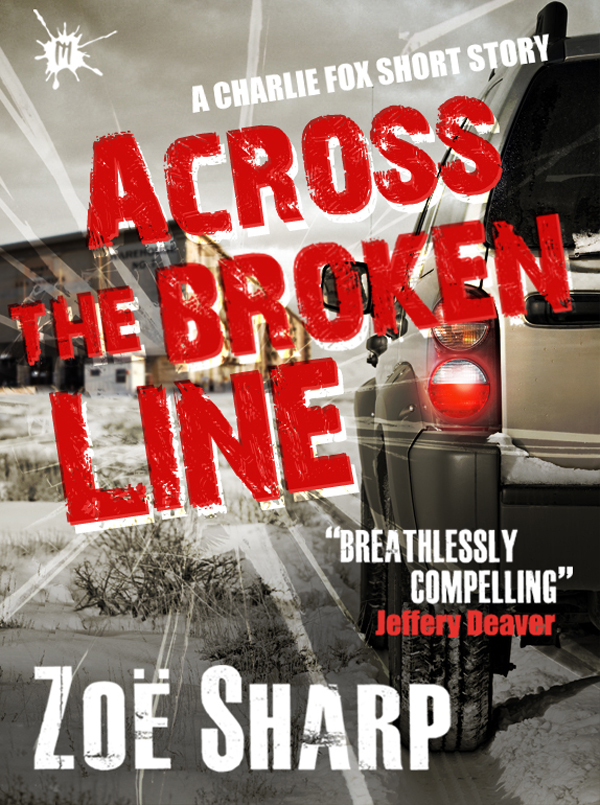
OK, so I’ve also been prepping the five stories from FOX FIVE: a Charlie Fox short story collection to go live individually, and as Christmas is coming up I thought I ought to have a new Charlie Fox short, too, which I’d written the bulk of a month or so ago, but you know how it is when you’ve put something aside and then you pick it up again. It really did need another fiddle. And a new title. And a cover.

(The cover is another belter by Jane Hudson at NuDesign that just captures some of the urgency and the flavour of the story for me. I know I keep singing her praises, but it’s not difficult when someone has as much talent as she does.)

Across The Broken Line – which has become the eventual title – was originally going to be part of the FOX FIVE e-thology. I wanted to have a go at a very broken-up timeline of catching Charlie in the middle of a job and then tracking back and forth through the various stages to show how things got to the point where it all goes bad. Sounds simple when you put it like that, huh? But I wasn’t happy with my early attempts so I put it aside in favour of Truth And Lies, which grew more into a novella than a short story. Whether I’ve got the broken timeline just right this time is another matter, though. I’ll wait for you to tell me!

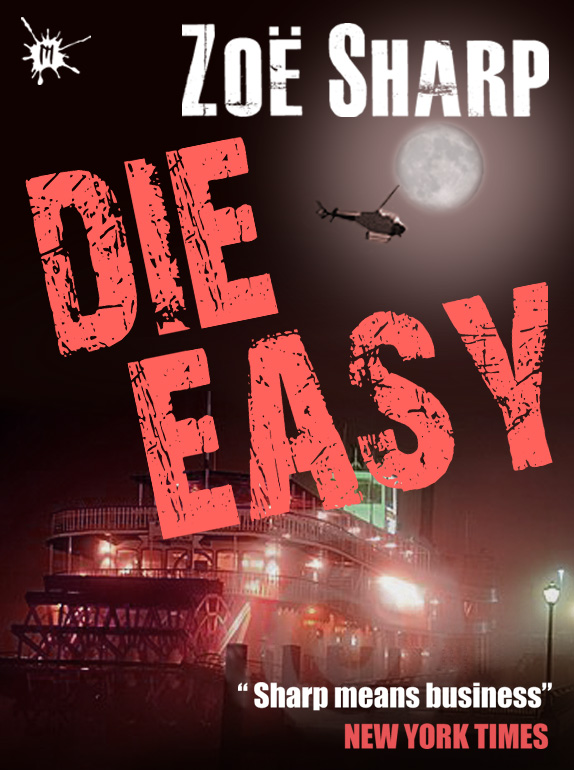
But still, not making my 70k on DIE EASY rankles. I’m very good at beating myself up for not hitting a target so I’m still feeling a little disgruntled that I’m not as far forward with the new book as I would have liked. I’ve already dragged Charlie through a helicopter crash and the emotional trauma of coming face to face with someone from her past she never wanted to see again. And now she’s running round a hijacked sternwheel paddle steamer on the Mississippi river with bad guys abounding.

I even have a provisional cover – another from Jane at NuDesign:

But it makes me wonder about everyone who does manage to achieve their NaNo goal. I’ve seen/heard on Twitter about plenty of people who’ve done it, but how many fallers are there? How many achieved their 50k? How do you feel now it’s over – good or bad? And what do you think of what you’ve written – how much of it will you keep hold of? Are they finished words or just a starting point?

Was it your first attempt? Will you do it again? If you haven’t attempted it, would you ever consider it? Or have you ever put yourself through any kind of concerted effort for a relatively short period of time, like a month – whether it’s a diet or an exercise plan or whatever? Good experience or no?

Also, I can’t ignore that – if yesterday was the end of November – today is the first of December. I can officially say Christmas is coming. Today the tree will go up, the cards will start to be written, pressies will be wrapped.

And there’s now 40,000 words to be done by the end of the month …

This week’s Word of the Week is trepan, which not only means an obsolete cylindrical saw for perforating the skull (just in case anyone was stuck for a Christmas gift for that difficult relative) and to cut a cylindrical disc from something, but it’s also a decoy, a snare, or to ensnare or lure. Unlike a trepang which is a sea cucumber eaten by the Chinese.


Politics and a Police Officer’s Death

David Corbett

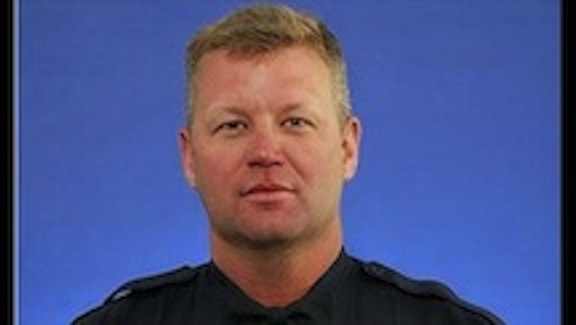
For part of today, I will be away from my desk, attending the memorial service for Officer Jim Capoot (pronounced Ka Poo), who was killed in the line of duty on Thursday, November 17th, in my hometown, Vallejo, California. As council member Stephanie Gomes said in her comments at an earlier memorial conducted on November 20th, Officer Capoot wasn’t a hero just because of how he died, but even more because of how he lived.


He was shot and killed while pursuing a bank robbery suspect who fled on foot after Officer Capoot rammed his SUV in a PIT maneuver. Fellow officers who’d joined in the pursuit were only seconds away when Officer Capoot was shot dead. The other officers subdued the suspect, Henry Albert Smith, with tasers and took him into custody. An ex-felon who reportedly was having financial problems, the suspect was arraigned yesterday, and pled not guilty.

The Vallejo Police Department has shrunk to record low numbers recently due to budget constraints. Though small, it is a proud force and tightly knit. Officer Capoot’s loss was deeply felt, not just by his fellow officers, but by the entire community.

The Man

Born in Little Rock, Arkansas, Jim Capoot was an ex-marine who served in Vallejo as a motorcycle officer, motorcycle instructor, driving instructor and SWAT officer.

In 19 years with Vallejo PD, he received two Department Medals of Courage, two Life-Saving Medals, and other department commendations, including the department’s first Jeff Azuar Officer of the Year Award in 2000, named after the last Vallejo officer to die in the line of duty.

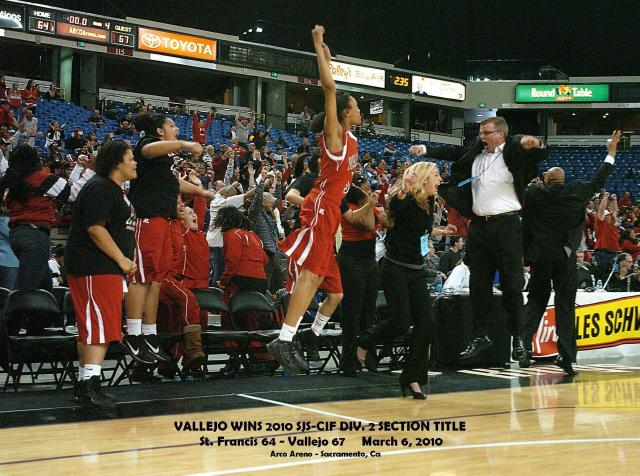
The father of three teenage girls, he volunteered to coach the girls’ basketball team at Vallejo High, and took them to the sectional championship. His players remembered him as much more than a coach, but someone who transformed their lives. One of the sayings that his star player applied to every aspect of her life: “Pain is temporary, but pride is forever.”


When two friends were killed in a motorcycle accident, he and his wife took in their two children, and Capoot built an addition to the family home to accommodate them.

He also coached soccer and softball, and when asked how he could take on so many responsibilities, he responded, “You don’t understand the need that’s out there.”

He was also a fiercely competitive dirt track racer, with a puckish sense of humor: He recruited a local donut shop to be the sponsor for his vehicle, Car 54.

Since the killing, citizens, neighbors, fellow coaches and members of the teams he coached have all stepped forward with heartfelt testimonials of what a selflessly devoted, inspirational and generous man he was. One of the last 911 calls he responded to was from a twelve-year-old boy who complained about his father’s disciplining him for not doing his homework. Capoot told the boy that he shouldn’t abuse 911 for non-emergencies, but then spent a few moments with him, telling him that he should obey his dad and work hard in school. The boy’s father said it made a huge impression on his son. “His teacher says, ever since it happened, it’s like he’s a new kid.”

The City

Officer Capoot’s death didn’t take place in a vacuum, obviously. Vallejo is a city of incredible contrasts that faces considerable challenges.

It once housed the largest US Navy shipyard overhauling nuclear submarines on the west coast. With closure of the shipyard in 1994, the city’s struggled to find a new direction.

Then disaster hit:

The foreclosure crisis struck like a nuclear bomb—with Vallejo ranked fourth nationally among the hardest hit cities. Abandoned houses now serve as meth labs, shooting galleries and squatter dens.

With the resulting crash in home prices, property tax revenue dwindled.

With the economic meltdown, businesses shuttered, sales taxes shrank.

Public employee wage and benefit packages—including those for police—became unsustainable, and mistrust between city government and the public service unions made compromise impossible.

In 2008, the city filed for bankruptcy—the largest California city ever to do so.

Draconian cuts in city services resulted, including a cut in the local police force from 153 to 90 officers. Because of these cuts, only six officers were on patrol—for a city of over 116,000 people—at the time of the midday bank robbery that led to Jim Capoot’s death.

The rancor over those cuts in fire and police services continues to divide the city today:

Supporters of the police and firefighters remain convinced the city sold them out.

Others refer to the public service unions (PSUs) as political machines feeding at the taxpayer trough.

The situation is worsened by a local newspaper that seems to prefer scare-mongering to factual reporting, going so far as to include burglary in violent crime numbers to make the latter appear worse than they are. (Crime is unquestionably a problem here, with a higher-than-average crime rate for the state, and a lower clear rate with the reduced staffing. But by at least one analysis, crime rates have actually been dropping the past several years, and are currently at their lowest rate in sixteen years. Fear of crime, however, and denigration of the city as a ghetto, continues to fester, due in no small part to the sorry state of local reportage.)

In the wake of Officer Capoot’s death, some are saying that members of the city council who weren’t solidly behind the police have blood on their hands for creating the low-staffing and minimal patrol numbers they believe contributed to his killing.

Their opponents point out that the police chief, after consulting with the VPOA, told the city council that the police union membership itself voted to keep pay and benefit rates near their current levels, and decided it would find a way to handle the cuts in staffing.

Police officers I’ve spoken to fear that a two-tier wage system would undermine the cohesion, high skill level and professionalism on the current force, which enjoys an excellent reputation with other local, state and federal law enforcement agencies.

Meanwhile:

Violent crime calls now consume patrol officers’ time, to the point even burglaries are largely neglected, unless in progress. (Some officers called the city a war zone, and three were quoted advising prospective residents not to relocate to Vallejo.)

Prostitution and drug dealing are conducted openly, and are only now once again receiving police attention due to the redeployment of the Street Crimes Unit.

Gangs exhibit more civic pride than the Chamber of Commerce:

At the same time, neighborhood watch groups have exploded, increasing in number from 10 to 350. Prostitution patrols and clean-up crews have helped turn back the rise in open prostitution and neighborhood blight. Citizen engagement is growing.

The political divide became apparent again in the most recent election, when a 1% sales tax increase was on the ballot. The PSUs and their supporters were in favor, hoping the additional revenue would help enhance police and firefighter staffing levels.

Opponents of the measure noted that the new funds were not earmarked in any way, and they feared that once again union pressure would draw all the new revenue toward public employee wages and benefits, and away from other city services that have been savaged in the recent austerity moves.

Sadly, it appears some intend to use Officer Capoot’s death as a weapon in this debate.

I don’t believe our police are overpaid, and this recent fatality should put that talk to rest for a good long while.

But that does not mean the city can return to its former profligate ways. The bankruptcy has created a stigma that has driven away business and investment, and this won’t turn around soon, certainly not in today’s economic environment.

I hope instead Jim Capoot’s example of selfless commitment to the community and volunteerism inspires others to follow suit—join their neighborhood watch group or a clean-up or anti-graffiti team, volunteer for the CORE Team or Citizens on Patrol or Vallejo Lamplighter. I can think of few better ways to honor this incredible man’s sacrifice.

* * * * *

I’m not sure how to ask readers to chime in this week. Just feel free to say whatever comes to mind. And thanks.

* * * * *

JukeBox Hero of the Week: Several video tributes to Officer Capoot appear on YouTube. This one is my particular favorite: